
The Short Answer
To file bankruptcy in North Carolina, you generally need to have lived here for at least 91 days — the greater part of the 180-day period before filing. If you haven't met that threshold yet, you may need to file in the state where you previously lived. There's also a separate rule about exemptions: even if you qualify to file in NC, you must use the exemptions from the state where you lived two years before filing — which could mean you're using another state's rules to protect your property.
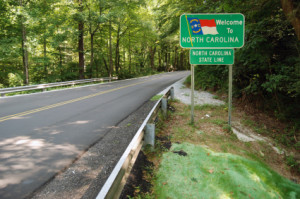 It depends. Normally, you must have resided in North Carolina for the greater part of 180 days before you can file a Chapter 7 bankruptcy or Chapter 13 bankruptcy in North Carolina. Under 28 U.S.C Section 1408 of the Bankruptcy Code a person or entity filing a bankruptcy must have resided at least 180 days in the judicial district, or the greater part of the 180 days (91 days) if they were residing in another judicial district.
Are you confused yet?
Generally speaking, you must have resided at least 91 days in the judicial district, such as the Western District (Charlotte area) or Middle District (Greensboro area) of North Carolina before you can file a bankruptcy in this state.
To eliminate this problem, you would normally wait until you had met the residency requirements before you file the bankruptcy. However if you just moved a few days ago to North Carolina from California or another state and you have to file a bankruptcy due to an emergency, you would probably have to file the bankruptcy in the previous state you lived in.
Some judicial districts may allow a resident of one state to file in another state. For example, if you live in Ft. Mill, South Carolina, which is just a mile or two across the North Carolina state line, and you work and shop in North Carolina on a daily basis and have other “connections” to North Carolina, you could probably file the bankruptcy in Charlotte, North Carolina. This is valid only if a creditor does not object to the residency requirements. However, you could not live in Texas and decide to file bankruptcy in North Carolina because you believe the North Carolina laws would be advantageous to you. You would have to file the bankruptcy in Texas.
Also remember even though you may meet the residency requirements to file in North Carolina, you must use the exemptions of the state where you resided two years before you file the bankruptcy. 11 USC 522(b)(3)(A). For example, if you just moved to North Carolina one year ago from Rhode Island you would meet the residency requirements to file in North Carolina, however you would have to use the Rhode Island exemptions to protect your property. (Note: Some states require you use the federal exemptions).
We hope this has helped you to understand the residency requirements to file bankruptcy in North Carolina.
Key Takeaways
- You must have resided in your specific NC judicial district — either the Middle District (Greensboro/Winston-Salem area) or the Western District (Charlotte/Asheville area) — for at least 91 days before filing bankruptcy here.
- If you recently relocated to NC and face an emergency filing, you may be required to file in the state you moved from, even if you've already established a new home here.
- Living close to the NC border in a neighboring state may allow you to file in NC if you have significant daily connections here, but only if no creditor objects to venue.
- Where you file and which state's exemptions you use are two entirely separate questions governed by different rules — meeting NC's residency requirement does not automatically mean you get NC's exemptions.
- If you moved to NC within the past two years, you may be required to use the exemptions from your previous state, which could protect more or less property than NC's $35,000 homestead and $3,500 vehicle exemptions.
- Waiting until you've met the 91-day residency requirement is usually the simplest solution if your situation isn't an emergency.
Attorney Insight
The mistake I see most often is people assuming that moving to North Carolina automatically means they file here and use NC exemptions — those are actually two separate legal questions with two different lookback periods. Someone who moved to Charlotte from another state eight months ago may qualify to file in the Western District of NC, but still be stuck using their old state's exemptions because they haven't been here for two full years. That distinction matters enormously — NC's $35,000 homestead exemption and retirement account protections are strong, but if you're forced to use a state with weaker exemptions, you could lose property the trustee would otherwise leave alone. I always map out both questions before we file anything.


