Facing debt, foreclosure, or
constant creditor calls
in High Point?
You have options.
We help High Point and Triad-area families stop collection calls, protect their property, and get a real fresh start — free phone consultation, no pressure, someone available 24/7.
How can we help you?
High Point families come to us with many different financial situations. Whatever you’re dealing with, we’ll explain your options clearly and honestly — at no cost.
Chapter 7 Bankruptcy
Discharge credit cards, medical bills, and other unsecured debt — typically in 4–6 months. Most people keep their home, car, and retirement savings.
Learn about Chapter 7 →Chapter 13 Bankruptcy
Reorganize debt into an affordable 3–5 year plan. Stop foreclosure, catch up on mortgage arrears, and protect property you might otherwise lose.
Learn about Chapter 13 →Stop Foreclosure
Filing triggers an automatic stay that stops foreclosure immediately. Chapter 13 can give you time to catch up on missed mortgage payments and keep your home.
Learn what may help →Stop Wage Garnishment
The automatic stay stops most wage garnishments immediately upon filing, putting an end to creditors taking money directly from your paycheck.
Learn what may help →Stop Repossession
Chapter 13 can stop a pending repossession and let you catch up on car payments through a repayment plan so you can keep your vehicle.
Learn what may help →Not Sure Where to Start?
Start with a free phone consultation. We listen, explain your options honestly, and let you decide — with no pressure and no obligation to do anything at all.
Start here →Who typically files for bankruptcy?
People who file for bankruptcy are not irresponsible or failures. They are ordinary people — working families, retirees, small business owners — who faced circumstances beyond their control: a job loss, a divorce, a serious illness, or simply years of making ends meet on an income that could not keep pace with rising costs.
The most common reasons our High Point clients come to us include:
- High credit card debt that has become unmanageable
- Medical bills from an unexpected illness or injury
- Home foreclosure or risk of losing their home
- Vehicle repossession or threat of repossession
- Wage garnishment taking money from every paycheck
- Personal loans and payday loan cycles
- Harassment from creditors and debt collectors
- Job loss or significant reduction in income

The number one thing we hear from clients after their first call is: “I wish I had called sooner.” Most people wait months — sometimes years — out of embarrassment or fear. Please don’t. Bankruptcy is a legal process designed to give people a second chance. There is no judgment here.

The team who will handle your case
You will not be handed off to a call center or left to figure this out alone. All three of our attorneys handle High Point and Triad-area cases — each bringing the same commitment to clear, compassionate guidance.

Damon Duncan
Damon has focused his career on consumer bankruptcy law and helping North Carolina families find a path forward. He is known for clear explanations and a no-pressure approach.
Board-Certified Consumer Bankruptcy Learn More
Terry Duncan
Terry has guided thousands of North Carolina families through bankruptcy over a distinguished career — with more than 5,000 cases filed and a reputation for steady, trustworthy counsel.
30+ Years of Experience Learn More
Anne Salter
Anne brings warmth, precision, and a deep knowledge of North Carolina bankruptcy law to every client she serves. Clients frequently cite her responsiveness and clear guidance.
Compassionate Client Advocate Learn MoreExperienced. Board-certified. Available 24/7.
Duncan Law has been helping North Carolina families navigate bankruptcy and debt relief since 1996. Damon Duncan is board-certified as a specialist in consumer bankruptcy law by the North Carolina State Bar — a credential held by only a small fraction of NC attorneys.
Together, our attorneys have guided thousands of North Carolina families through Chapter 7 and Chapter 13 cases — with more than 5,000 filed — guiding you through every step so you’re never left to figure it out alone.
On average, our clients see about a 100-point drop in their credit score after filing. But for many people already missing payments, the long-term picture after bankruptcy is significantly better — not worse.
- Chapter 7 on credit report up to 10 years
- Chapter 13 on credit report up to 7 years
- Many clients see improvement within 1–2 years of filing
- Discharged debts are removed, improving your overall profile
Certified NC Consumer Bankruptcy Specialist
What happens during your free phone consultation?
Most consultations take 20–30 minutes and are done entirely by phone. Here is exactly what to expect.
We listen
Tell us what is going on — debt, lawsuits, foreclosure, garnishment, repossession, or anything else. There are no wrong answers and nothing you can say that will surprise us.
We ask a few questions
We ask about your income, property, debts, and what you most want to protect. This gives us the information we need to give you accurate answers instead of generic ones.
We explain your options
We walk through Chapter 7, Chapter 13, or non-bankruptcy alternatives — in plain English. You will understand what each path would mean for your specific situation.
You decide what comes next
There is no pressure and no obligation. You leave the call with a clear picture of your options and all the time you need to decide. Many clients say this call alone was worth it.
Or call us any time — (336) 294-5800 — we answer 24 hours a day.
Chapter 7 vs. Chapter 13 — which may help you?
Both chapters stop collection calls, lawsuits, garnishments, and foreclosures. The right choice depends on your income, property, and goals.
| Your Situation | Chapter 7 | Chapter 13 |
|---|---|---|
| Best for | Credit cards, medical bills, unsecured debt — with limited income | Catching up on mortgage or car arrears, higher income, protecting property |
| Timeline | Typically 4–6 months | 3–5 year repayment plan |
| Monthly payments? | Usually none | Yes — monthly trustee payment |
| Stop foreclosure? | Temporarily — buys time, does not cure arrears | Yes — can cure mortgage arrears through the plan |
| Stop repossession? | Temporarily — may need to surrender or reaffirm | Yes — can catch up on car payments through the plan |
| Keep your property? | Exempt property protected by NC exemptions | All property kept — arrears caught up through plan |
The U.S. Bankruptcy Court serving High Point
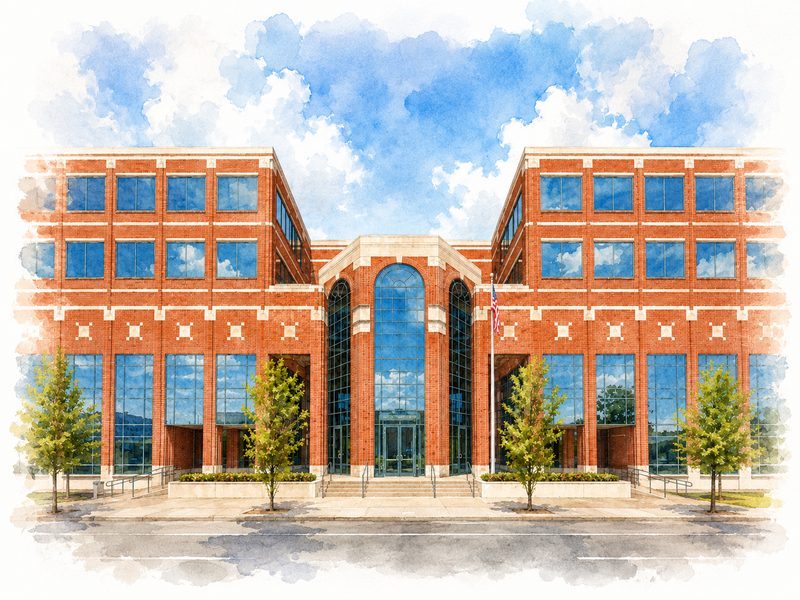
Bankruptcy cases for High Point and Guilford County residents are handled by the U.S. Bankruptcy Court for the Middle District of North Carolina, Greensboro Division — the same court that serves Greensboro and the surrounding Piedmont region.
Middle District of North Carolina
Greensboro Division
101 S. Edgeworth StreetGreensboro, NC 27401
Duncan Law handles all filings and court communications. Most clients never need to visit the courthouse.
Common myths about filing for bankruptcy
Fear and misinformation keep many people from getting help that could genuinely change their lives. Here are the three most common concerns we hear — and the truth.
“Will I go to jail?”
No. Bankruptcy is a civil legal process, not a criminal one. You cannot be arrested or jailed for filing bankruptcy or for being unable to pay your debts. It is a federal process designed specifically to help people in financial difficulty.
“I’ll never buy a home again.”
Not true. Many of our clients purchase homes within 2–4 years of filing. FHA loans may be available as soon as 2 years after a Chapter 7 discharge. The path back to homeownership is real and achievable.
“I’ll lose my job.”
Federal law prohibits employers from terminating or discriminating against employees solely because they filed for bankruptcy. Your employment is protected by law.
Communities we serve from our High Point office
Our High Point office is located on Premier Drive in northwest High Point. We primarily serve clients in Guilford, Randolph, Davidson, and Forsyth counties — the communities across the southern and western Triad. Almost all consultations are done by phone, so your exact location rarely matters.
High Point
As the Furniture Capital of the World and Guilford County’s second largest city, High Point is home to our southern Triad office. We help High Point families navigate Chapter 7 and Chapter 13 bankruptcy with free phone consultations available 24/7.
Jamestown & Archdale
Southern Guilford communities including Jamestown and Archdale are just minutes from our High Point office. We regularly help families here stop collection calls and explore their debt-relief options by phone.
Thomasville & Lexington
Davidson County families in Thomasville and Lexington have access to the same experienced bankruptcy attorneys as our High Point clients. Most consultations require no office visit — just a free phone call.
Trinity & Randleman
Randolph County communities including Trinity and Randleman are well within our service area. We help families here with Chapter 7 and Chapter 13 bankruptcy representation throughout the Middle District of NC.
Asheboro & Randolph County
Randolph County families in Asheboro and surrounding communities have turned to Duncan Law for debt relief and bankruptcy guidance. All consultations can be handled entirely by phone.
Kernersville
Located between High Point and Winston-Salem, Kernersville families can work with either our High Point or Winston-Salem attorneys for bankruptcy help. Free phone consultations are available 24/7.
Wallburg & Midway
Davidson County communities like Wallburg and Midway sit between High Point and Lexington in the heart of our service area. We serve families here with Chapter 7 and Chapter 13 bankruptcy filings.
Sophia & Seagrove
Southern Randolph County communities including Sophia and Seagrove can reach our High Point office by phone for a free bankruptcy consultation. We serve clients throughout the southern Piedmont region.
Summerfield & Oak Ridge
Northern Guilford communities including Summerfield and Oak Ridge are served by both our High Point and Greensboro offices. We help families in this area find the right debt-relief path for their situation.
Climax & Gibsonville
Guilford County communities including Climax and Gibsonville are part of the broad service area our High Point office covers. Phone consultations are available any time, day or night.
Don't see your city? Call us 24/7 — we serve clients throughout North Carolina.

Why we opened a High Point bankruptcy office
High Point has long been the industrial and commercial heart of the southern Triad — the Furniture Capital of the World, home to a workforce that has built careers in manufacturing, logistics, and trades. But economic shifts hit communities like this hard, and when they do, the families who keep an economy running are often the ones who find themselves without a financial safety net. Credit card debt, medical bills, a job loss in a sector that used to be reliable — these are the stories we hear from High Point clients regularly.
We opened our High Point office because these families deserved a dedicated local option — not a long drive to Greensboro or a generic call center, but an experienced bankruptcy attorney who would take the time to understand their situation and give them straight answers. Guilford County, Randolph County, and Davidson County families have relied on Duncan Law for nearly three decades. This office is our commitment to continuing that work in the community where much of it has always been needed most.
Real people. Real relief.
“I was worried and stressed beyond words when I first spoke to them. After just the first consultation I felt all that weight rolling off my shoulders. They made it simple and easy to navigate the paperwork and answered all of my questions in a timely manner. These are the ones you want in your corner.”
“If you have to navigate the frightening experience of bankruptcy, this is the team to trust! As a doctor, I know what quality effort looks like, and Damon and his team are tireless in their support of you. They go to great lengths to demystify and explain the complexities. If you were my own family, I would recommend Duncan Law above all others.”
“They gave me my life back, and I could not be more grateful. Every step of the process is explained to you as you go — they really held my hand and calmed my fears from the first day until the last. When you call, someone will talk to you. I would recommend Damon to anyone. Top notch.”
High Point office information
Our High Point office is located on Premier Drive in northwest High Point — convenient to clients from Jamestown, Archdale, Thomasville, and communities throughout the southern Triad. The majority of our client meetings are handled by phone, so you may never need to come in person.
We answer calls 24 hours a day, seven days a week. When you are ready to talk, call us or schedule online — we will connect with you at a time that works.
Duncan Law — High Point
High Point, NC 27265
Common questions from High Point residents
General Questions
Chapter 7 is a liquidation bankruptcy that discharges most unsecured debts (credit cards, medical bills, personal loans) in 4–6 months. Most filers keep their home and car because NC exemptions protect significant property. Chapter 13 is a reorganization bankruptcy where you make payments through a 3–5 year plan, allowing you to catch up on mortgage or car arrears and keep property you might otherwise lose. The right chapter depends on your income, property, and goals.
For Chapter 7, you must pass the means test — a comparison of your income against the North Carolina median income for a household your size. If your income falls below the median, you generally qualify automatically. If it is above, additional calculations determine eligibility. Chapter 13 requires regular income to fund a repayment plan. Most people with a genuine need for debt relief qualify for one chapter or the other. A free consultation will determine your options at no cost.
Insolvency generally means your debts exceed your assets, or you are unable to pay your debts as they come due. You do not need to be technically insolvent to file for bankruptcy — the means test and other eligibility requirements govern qualification. Many people who file are still current on some payments but can see that their overall financial situation is unsustainable.
Filing for Bankruptcy
Typically you will need: recent pay stubs (last 60 days), your last two years of tax returns, bank statements, a list of all creditors and balances, documentation of property you own (mortgage statements, vehicle titles), and recent monthly expenses. We provide you with a complete checklist and walk you through gathering documents step by step.
The Section 341 Meeting of Creditors is required in both Chapter 7 and Chapter 13 cases — a brief meeting with the bankruptcy trustee typically conducted by telephone in the Middle District of NC and lasting only a few minutes. Creditors rarely appear. For Chapter 13, there may be additional hearings, but Duncan Law handles all appearances and communications on your behalf.
High Point and Guilford County cases are filed with the United States Bankruptcy Court for the Middle District of North Carolina, Greensboro Division, located at 101 S. Edgeworth Street in downtown Greensboro. Duncan Law handles all filings and court communications on your behalf. Most clients never need to appear at the courthouse.
The moment your case is filed, an automatic stay goes into effect. This federal court order immediately stops: all collection calls and letters, wage garnishments, bank levies, foreclosure proceedings, repossession attempts, and most lawsuits. Creditors who violate the automatic stay can be held in contempt of court. The relief is immediate.
During Bankruptcy
In the vast majority of cases we handle, yes. North Carolina exemptions protect substantial property: home equity up to certain limits, one motor vehicle, retirement accounts, and essential personal property. In Chapter 7, exempt property is protected. In Chapter 13, you keep all property and catch up on mortgage or car arrears through your plan.
Yes. Filing bankruptcy triggers an automatic stay that stops foreclosure proceedings immediately — regardless of how close the foreclosure sale date is. Chapter 13 can then give you 3–5 years to catch up on missed mortgage payments through your repayment plan, allowing you to keep your home.
Student loans are generally not dischargeable unless you can demonstrate “undue hardship” through a separate legal proceeding — a high standard. However, the automatic stay stops any student loan wage garnishment while the bankruptcy is active, providing temporary relief.
Almost all of our consultations and appointments are conducted by phone. We designed our practice this way because people dealing with financial stress often have limited time, transportation challenges, or simply find it easier to talk privately from home.
After Bankruptcy
Chapter 7 remains on your credit report for up to 10 years from the filing date. Chapter 13 remains for up to 7 years. Individual discharged debts are also removed, which can improve your debt-to-income ratio. Many clients see meaningful credit score improvement within 1–2 years of filing.
For FHA loans, the typical waiting period is 2 years after a Chapter 7 discharge and 1 year into a Chapter 13 plan (with court approval). For conventional loans, waiting periods are typically 4 years after Chapter 7 and 2 years after Chapter 13 discharge. Many of our clients successfully purchase homes within a few years of filing.
Yes. Many filers receive credit card offers within months of their discharge. Secured credit cards are commonly available immediately after bankruptcy and are one of the most effective tools for rebuilding credit when used responsibly.
Bankruptcy and Taxes
Some income tax debts can be discharged if they meet specific requirements: the return was due at least 3 years before filing, the return was actually filed at least 2 years before filing, and the tax was assessed at least 240 days before filing. Payroll taxes, recent tax years, and taxes where the IRS has filed a lien generally cannot be discharged.
Tax refunds can be treated as assets depending on the timing of your filing and the size of the refund. In some cases, the trustee may claim part or all of a refund owed for the tax year in which you filed. Understanding how refunds will be treated is an important part of pre-filing planning we do with every client.
Getting Legal Help
You are not legally required to hire an attorney. However, bankruptcy law is complex, the paperwork is extensive, and mistakes can result in case dismissal or loss of exemptions. The cost of a bankruptcy attorney is often modest relative to the debt being discharged, and experienced representation significantly reduces the risk of costly errors.
Look for an attorney who focuses on consumer bankruptcy, who will give you a direct consultation rather than delegating to a paralegal, and who is transparent about fees. Board certification in consumer bankruptcy law — held by Damon Duncan — is the highest credential available in this field and requires demonstrated experience and a rigorous examination. Client reviews are also a strong indicator of the experience you can expect.
Talk to a High Point bankruptcy attorney — free.
We answer calls 24 hours a day. A free phone consultation takes 20–30 minutes and leaves you with a clear picture of your options and no obligation to do anything at all.